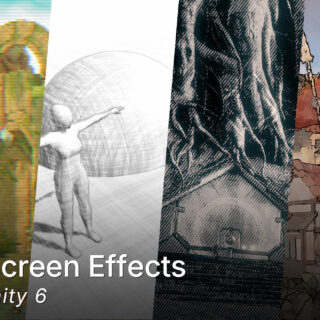
Originally released in 2018, SC Post Effects has helped bring more than 18,000 projects to life. Over the years, it grew from a collection of post-processing effects into a versatile toolbox for creating everything from subtle visual enhancements to stylized, gameplay-driven effects. But the Unity rendering landscape has changed considerably since then. A fresh start for Unity 6 With Unity 6, Render Graph became a central...
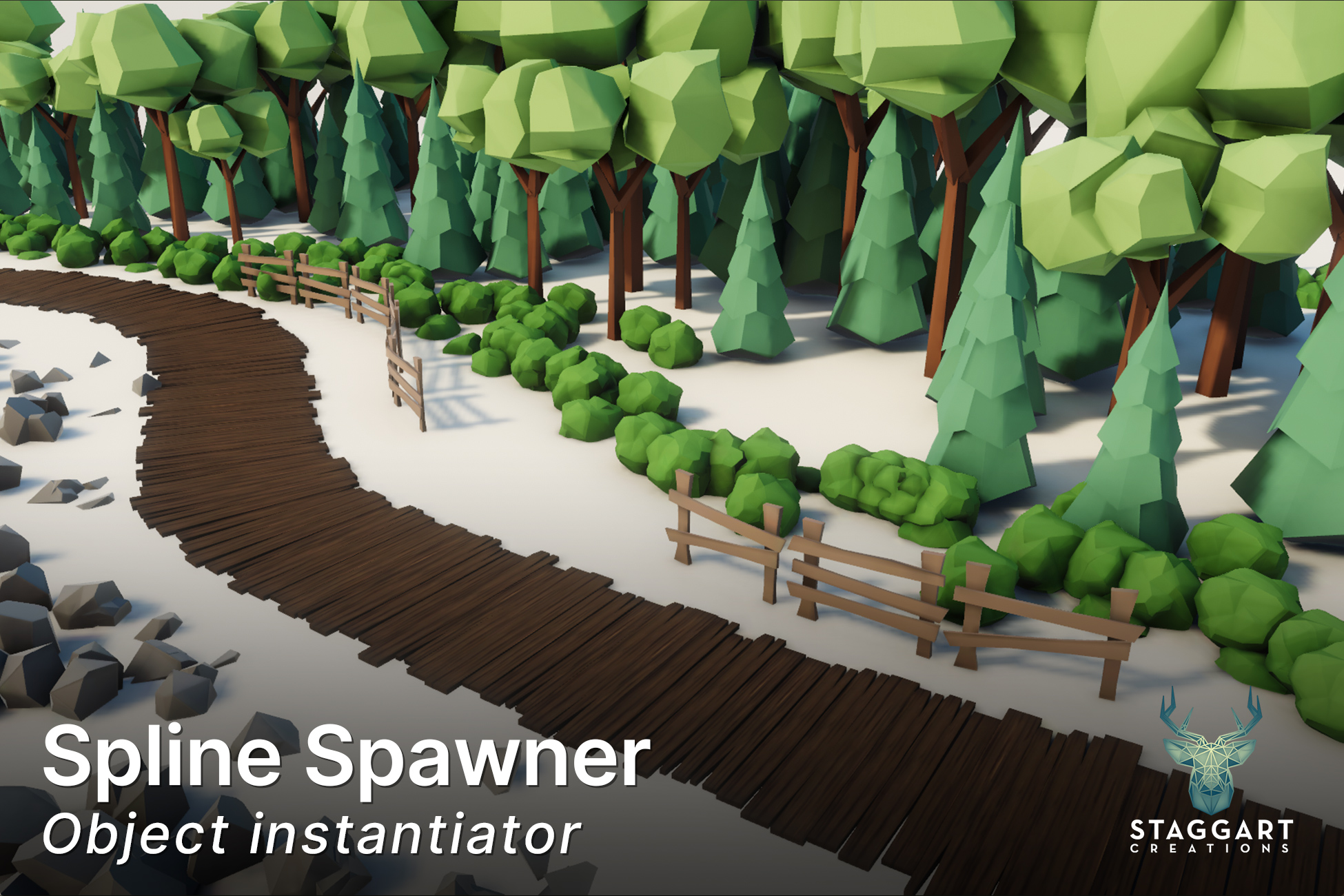
The successor to Spline Mesher as released in 2024, reworked from the ground up for multi threaded mesh generation (~50x faster). With advanced new features such a fill mesh generation, procedural input shapes and output splitting. Easily bend and repeat meshes along Unity splines for fences, pipes, paths, and more – or generate a mesh from a spline area. Fast, flexible, and built on Unity’s native...
Procedurally place and control prefabs along or within Unity Splines – perfect for world-building, gameplay, and environment art requiring full creative flexibility. After several months in beta testing, the Spline Spawner asset is now available on the asset store! This tool, originally developed in 2019 has been rewritten for Unity’s native Splines package and built around the Job system for next-gen performance.
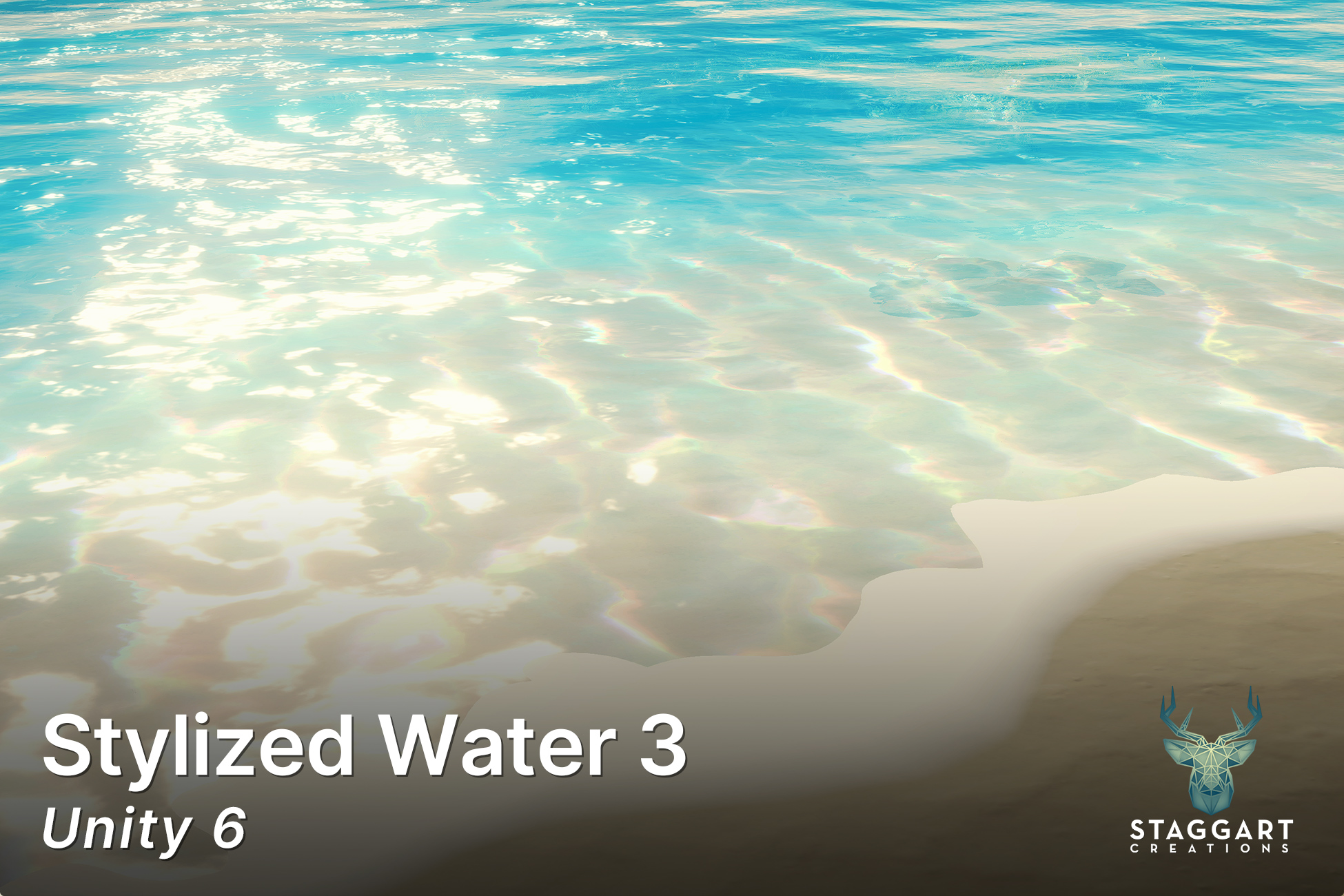
As the name implies, this is the continuation of SW2, for Unity 6. A fresh slate allowed me to freely iterate, without having to design around stability, as is the case for regular updates. Many things seemed to work well according to your feedback, and have remained the same. Whilst old backlog items and experimental features were revisited and formalized as new features. What’s new? Changelog...
A rather sizeable update landed! It involves a few major new features that cover both general and niche use cases. New features The asset has also been converted to a package, following the UPM format. This unfortunately means it needs to be deleted entirely before importing this update, but ultimately makes it more robust (ie. auto dependency installation and enforcing minimum compatible versions). Additionally, the price...
This server is the centralized place to find announcements, discussions and support/feature request forums. Join in to discuss and show off your creations! In order to access support channels and feature requests, your invoice number is required. You can find this on your Order History page.
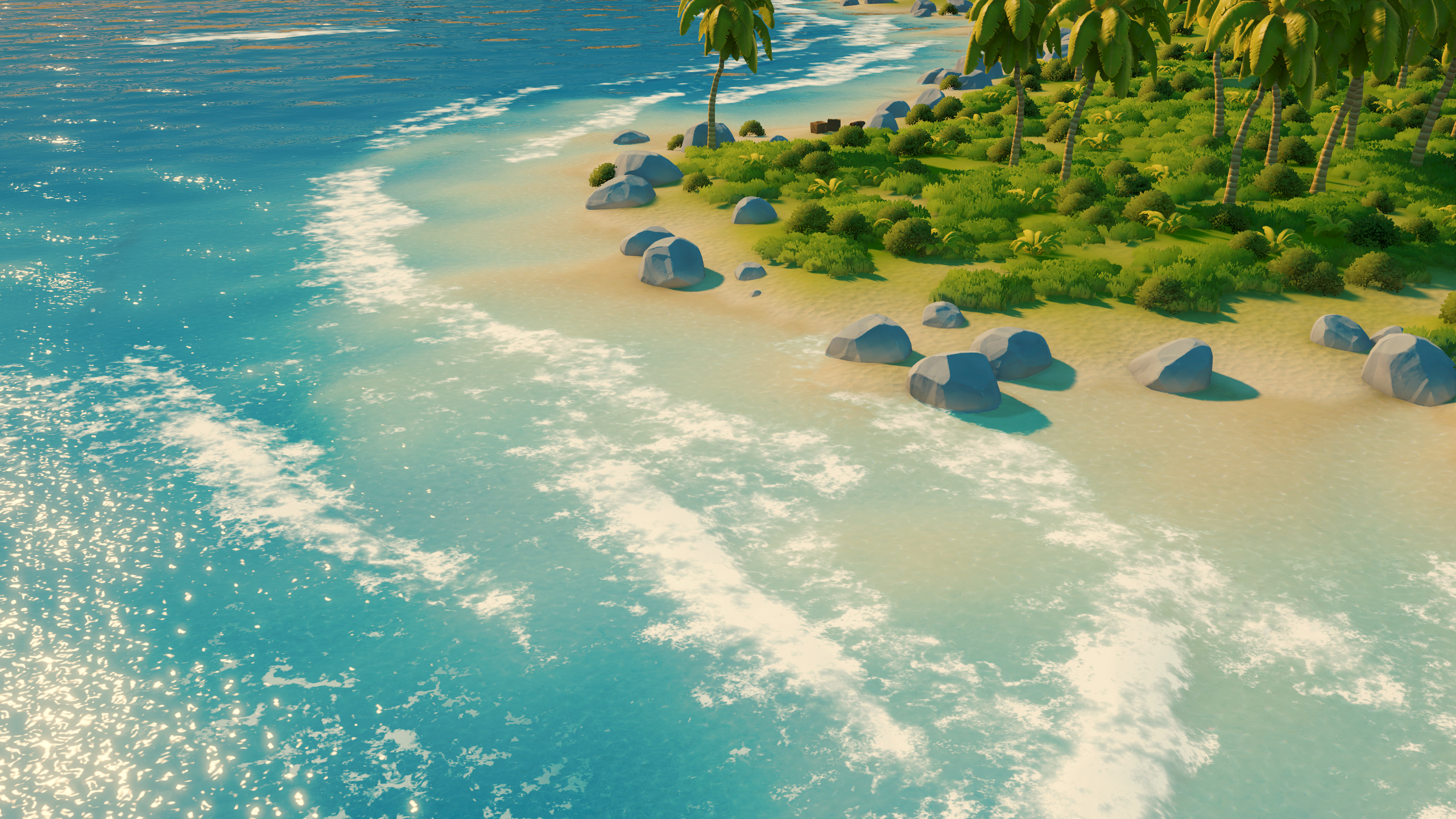
This extension adds a decal-like system that allows the water surface to be displaced and its foam and normals to be modified. These decals are projected from a top-down perspective onto the water surface. In practical terms, it means particle systems, trail renderers and static meshes can be used to influence the appearance of the water.
There are many facets to the development of the game as a whole, I’m confident there’s a wealth of knowledge to share on each front. This series of blog posts delves into the many aspects I was involved in, regarding world-building and graphics. I hope to consolidate the things that I’ve learned over the course of the game’s development. Hopefully this will provide some insight for...
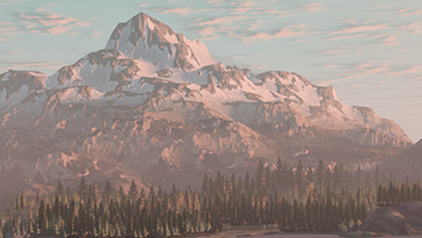
Recreating a real-world location was definitely new for me, having previously only worked from inspiration. Gathering references was easy, though the immense variety of locations made it difficult to really distil what represents Oregon in its broadest form. Vegetation is plentiful in Oregon, the state itself can be divided into several ecoregions. Though it largely boils down to forest, grassland and high desert. Forests provide a...
The landscape makes up the foundations of the game world. Hence it was the starting point for developing the environment. Building a terrain that was tailored to gameplay and level design, and should evolve alongside them, was a first for me. Design Lay of the land At the start of the project there were still many unknowns: How large was the world going to be? What’s...